Why the Christmas Tree Was Once Illegal and the Pagan Yule Traditions Behind It
THE TURNING
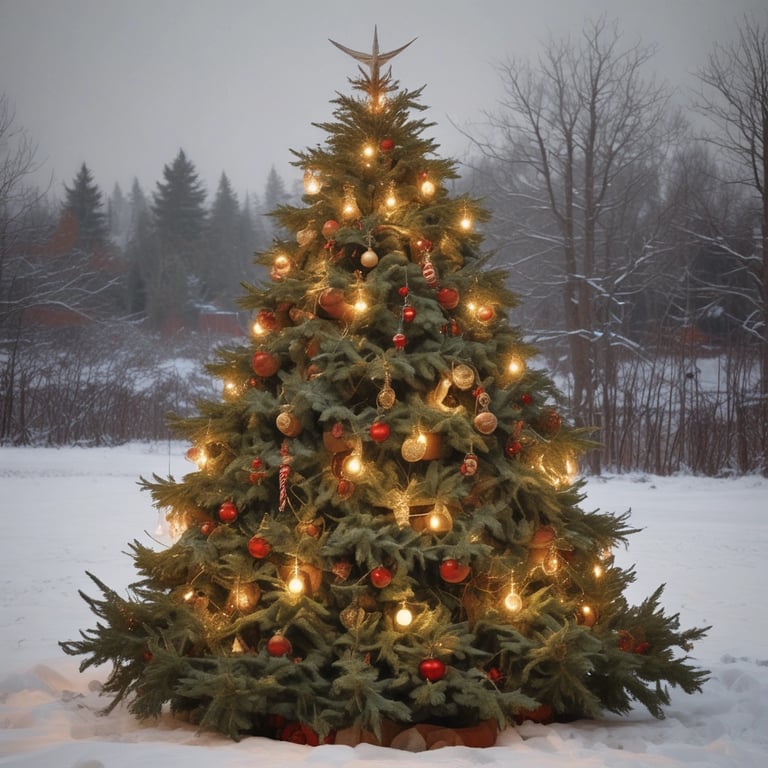
When you gather around your glowing tree this season, you are stepping into a story far older than Christmas...
You have probably heard the story of the Grinch stealing Christmas. But there is another story, not a cartoon, where the Puritans in Massachusetts literally banned the holiday altogether. (WBUR)
This living symbol you lovingly honor each December once carried the weight of suspicion, fear, and legal punishment. Not because it was frivolous or silly. Because it was ancient. Because it was powerful. Because it came from a world that honored nature, cycles, and the returning sun.
Let us walk back through time and remember what the tree truly stands for.
The Pagan Roots of Yule and the Evergreen Spirit
Long before anyone spoke the word Christmas, people across northern Europe were celebrating the winter solstice. Ancient Germanic and Norse peoples marked Yule, a deep winter festival when the sun reached its lowest point, and the world stood on the edge of rebirth. Evergreen branches were brought indoors as reminders that life survives even in the coldest darkness. Fires were lit to call the sun back. Communities feasted and told stories through the longest nights.
Historians note that bringing evergreen boughs into the home in midwinter was common among European pagans and Romans alike, who decorated with greenery during Saturnalia, their late-December festival to the god Saturn. (Newsweek)
The idea was simple and profound.
• The world looks dead, but life is still here.
• The sun is fading, but it will rise again.
• Winter is not the end of the story.
Early Christian missionaries moved into a landscape where these seasonal rites were already beloved and deeply rooted. Many midwinter customs were not erased, but slowly folded into Christian practice or relabeled through a new lens. According to historian Ronald Hutton, the Christmas tree as we know it appears in seventeenth-century Germany, but clearly grows from the older habit of bringing greenery indoors during midwinter. (Live Science)
The symbolism of the evergreen was so powerful that it could not be kept out. And yet that power is exactly what made it threatening to later religious authorities.
How Christian Authorities Turned Ritual into Idolatry
As Christianity spread, leaders needed a way to define which forms of worship were acceptable and which were forbidden. One of the most potent labels they created was 'idolatry'.
In its simplest sense, idolatry is the worship of an object or image as if it were a god, especially when this devotion rivals or replaces the worship of the one God in the Abrahamic traditions. (Wikipedia)
Over time, the accusation of idolatry became more than a description. It became a weapon. Seasonal symbols, village gods, ancestor statues, carved animals, and household charms could all be branded as idols or false gods. That label marked entire cultures as dangerous, deluded, or even demonic. (Wikipedia)
Notice what happens here. The meaning the object held inside its own culture did not matter. A carved figure might represent:
• Protection for the home
• Blessings on the harvest
• The personality of a river or forest
Yet once reformers or missionaries arrived, the same object could be recast as devil worship or spiritual corruption. The thing itself did not change. What changed was who had the power to name it.
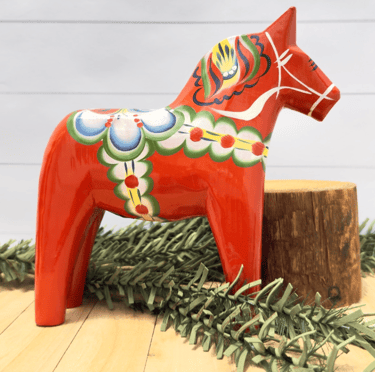
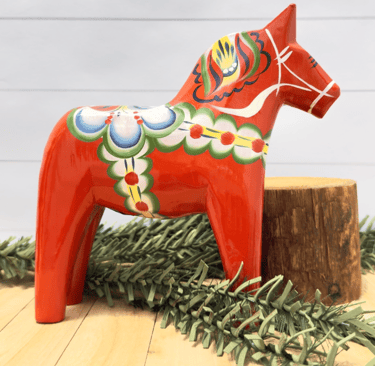
A small example of this is the Swedish Dala horse. This simple carved and painted wooden horse from Dalarna is now a beloved folk symbol associated with strength, good luck, and cultural pride. (History Collection)
Some modern writers have connected the Dala horse and other folk objects to older pagan customs and note that during periods of witch panic in seventeenth-century Sweden, practices from that region were brought under suspicion and linked to devil worship and witchcraft. (History Collection)
What began as humble winter folk art could, in the right political climate, easily become evidence of evil.
The same pattern shows up in the treatment of Yule greenery and early Christmas celebrations.
When Christmas Itself Became a Crime
By the time the Puritans arrived in New England, they were committed to a strict, scripture-centered faith that rejected anything they could not find clearly in the Bible. There was no mention of Jesus being born on the twenty-fifth of December. Midwinter feasting and evergreen decorations looked more like pagan solstice revelry than sober Christian worship.
So they outlawed it.
In 1659, the Massachusetts Bay Colony passed a law known as the Penalty for Keeping Christmas. Anyone caught celebrating the holiday by taking the day off work, feasting, or in any other festive way could be fined five shillings, which the state courts estimate would be about fifty dollars today. (WBUR)
Jonathan Beecher Field, a scholar of seventeenth-century Puritans, explains that the ban was partly about pagan roots and partly about social control. The Puritans insisted on worship that was driven only by scripture. Since Christmas was added to the Christian calendar centuries after Jesus, and since many of its customs had clear pagan connections, they saw it as suspect from the start. (WBUR)
The Reverend Increase Mather, father of Salem witch trials figure Cotton Mather, railed against Christmas celebrations as dishonorable and obsessed with what he called the excess of wine and mad mirth. He even questioned whether Christ himself would approve of these noisy, indulgent observances. (WBUR)
There was also a class issue. Puritan leaders favored a strict hierarchy, famously described in John Winthrop’s City upon a Hill sermon, where some people are the head, and others are the feet. Holidays, especially those with roots in older European customs, had a way of turning the social order upside down.
One example is wassailing. Poor colonists would go from house to house offering well wishes in exchange for food, drink, or gifts. In practice, this often meant alcohol fueled groups of the poor storming the homes of the rich and demanding treats. Historians point out that the song We Wish You a Merry Christmas, with its relentless call for figgy pudding and refusal to go until they get some, is a distant echo of this tradition. (WBUR)
To the Puritan mind, this was not charming. It was dangerous. The wrong people were getting too loud, too visible, and too free.
The law was repealed in 1681 under pressure from England, but the cultural impact lingered. Many New Englanders continued to treat Christmas as an ordinary workday well into the nineteenth century. It was not declared a federal holiday in the United States until the presidency of Ulysses S Grant, about two centuries later. (WBUR)
This is not a cartoon Grinch. This is the original war on Christmas, waged by Christians against a holiday they saw as too pagan, too rowdy, and too uncontrollable.
Banning Yule in Scotland
New England was not alone. In Scotland, the Protestant Reformation brought a similar suspicion of Christmas. The Church of Scotland opposed the holiday because of both its Catholic associations and its clear ties to older pagan solstice rites. (macfarlane.org)
By 1640, the Scottish Parliament passed an act that made celebrating Yule or Christmas illegal. Instead of Christmas, Scots leaned more heavily into Hogmanay, their New Year’s celebration, which took center stage for centuries while Christmas remained muted or ignored in public life. It was not until 1958 that Christmas finally became an official public holiday in Scotland. (macfarlane.org)
Again, look at the pattern. A beloved midwinter festival with roots in light, food, evergreens, and community is recast as suspect because it carries too much ancient power and refuses to stay within church-approved lines.
The Long Game of the Evergreen
Despite bans and denunciations, midwinter celebrations never really went away. Humanity needs ritual in the dark.
Historians point out that in agrarian societies, the winter season was a natural time for feasting and religious observance. The harvest was finished. There was little work to do in the fields. People were cold, tired, and a little scared that the sun might never fully return. Feasts, fires, and decorations were a way to keep collective hope alive. (Live Science)
Many cultures mark the sacred winter solstice with their own festivals.
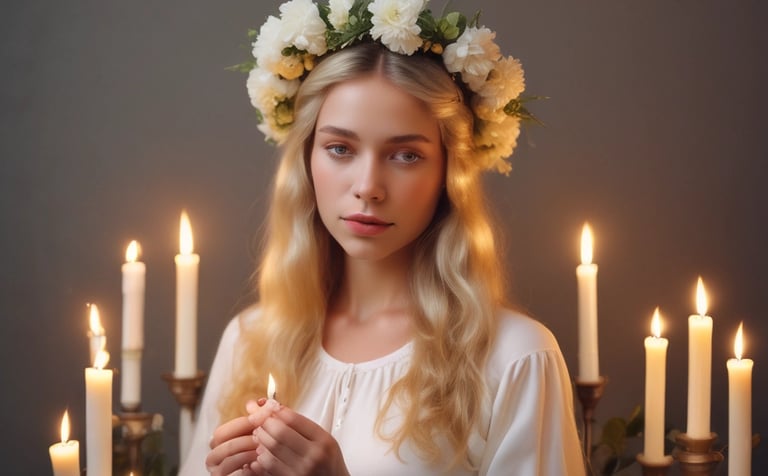
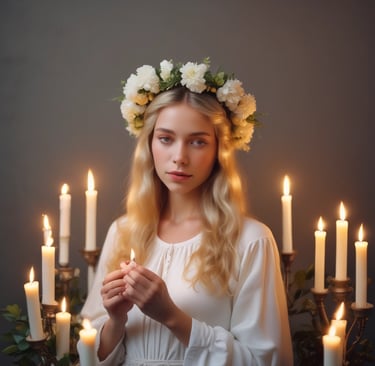
In Nordic countries, St. Lucia's Day, celebrated on December 13th, may combine a pagan ritual called Lussinatta with a more recent ceremony in which young girls wear a crown of candles on their heads.
LiveScience notes that Christian leaders in the fourth century eventually chose to place the celebration of Christ’s birth in this same window, partly as a way to affirm that Jesus was a real human being with a real birth and partly because the symbolism of new light arriving in the darkest season fit so well with existing solstice themes. (Live Science)
Over time, midwinter festivals and Christmas blurred into each other. Pagan roots and Christian stories wove together. Gift-giving, once more common at New Year, shifted to the Christmas season during the Victorian era. (Live Science)
The evergreen tree especially refused to be erased. German Protestants embraced decorated trees in the home. Later, Queen Victoria and her German husband, Prince Albert, popularized the Christmas tree across the English-speaking world when an illustration of their family gathered around a candlelit tree at Windsor Castle went viral in the media of their day. (People.com)
The very symbol once condemned as pagan and rejected by Puritan leaders became the centerpiece of respectable Christian Christmas.
You cannot outlaw what the human spirit needs.
Why This History Matters For You Now
Most people decorate a tree without realizing the layers of resistance and survival wrapped around its branches. The evergreen in your living room is not just décor. It is a survivor. A symbol that outlived bans, fines, and accusations of idolatry. A reminder that life and light persist even when institutions try to control how we celebrate them.
In my Double Detox work, we talk about:
• Clearing inherited stories
• Cleansing old fear from the nervous system
• Cultivating freedom and truth in the body
This history is the same story, told through ritual instead of supplements.
The tree was never truly about forbidden worship of false gods. It was about honoring the living world, the turning of the seasons, and the deep knowing that darkness is not permanent. When you reclaim the tree for yourself, you reclaim your spiritual sovereignty. You declare that you are allowed to feel awe, joy, sensuality, and connection without anyone else deciding what that means.
A Simple Ritual to Reclaim the Evergreen
This December, whether during the Full Moon, the solstice, or a quiet night in front of the lights, try this.
Stand in front of your tree. Place your hand gently on the trunk or a branch. Feel the texture. Feel the aliveness.
Then say, out loud or in your heart:
I release the old fear that once marked this symbol forbidden.
I welcome the return of the light.
I honor the life within me that stays green in winter.
I choose my own meaning now.
You are not mimicking an old custom. You are reviving an ancient one.
The Tree You Decorate Is an Act of Freedom
We still live in a world eager to tell us what is sacred and what is suspect. What is feminine and what is too much? What is sensual and what should be hidden? Yet here, in the center of your home, stands a tree that once broke the law just by existing in public.
It stands now for you.
Let it remind you that you are alive.
That you are resilient.
That you are slowly, steadily turning back toward your own inner sun.
Could you clear what is false?
Cleanse what weighs you down? and
Cultivate the freedom that has always been yours?
The evergreen stands with you. 🎄
And you are free.
With Love & Liberty 🏹
Jen Coombe ✨ alias ~ Jennadea