
Before Resurrection Had a Name: The Spring Equinox & Return of our Sun’s Light
THE TURNING
Jen Coombe
3/22/20265 min read
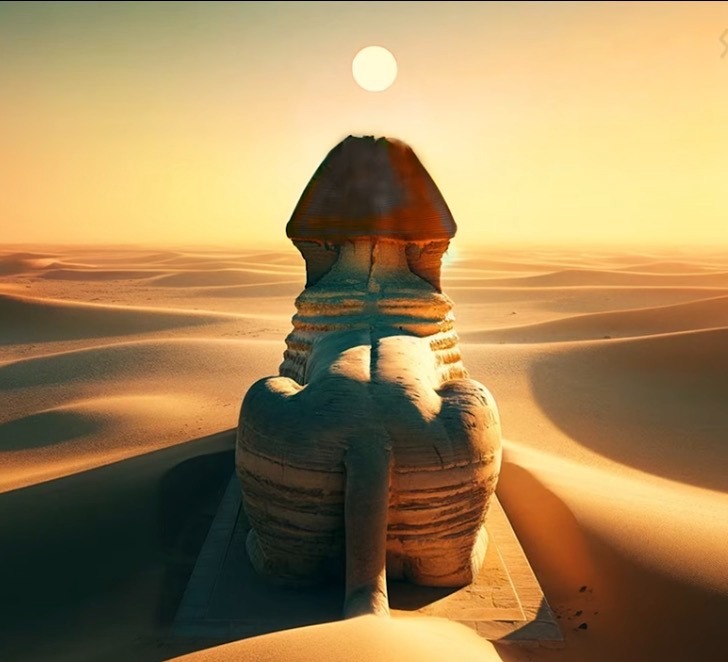
Ancient cultures honored the Spring Equinox as a visible return of light, long before the idea of resurrection was shaped into religious doctrine.
The Sphinx was already facing due east, gazing at the rising sun and its resurrection thousands of years before Bethlehem, the only resurrection that never required belief.
Long before any church calendar or formal doctrine, ancient cultures all over the world were paying attention to this moment each year. They were not just noticing it in passing. They were building for it, aligning their most sacred, megalithic structures to meet the sun at that exact point on the horizon as it appeared on the morning of the Spring Equinox, when day and night are equal.
When you look at these sites side by side, the pattern is difficult to ignore. Cultures separated by oceans and time aligned their most important structures to the same sunrise with striking precision, a pattern explored in detail by Sakro Sawel in this Spring Equinox video:
From Ireland to Cambodia to the Illinois River Valley, cultures with no known contact with each other oriented their most important structures toward sunrise on the Spring Equinox. The scale of what they built is staggering.
A World Oriented to the Same Light
The Spring Equinox is the moment the year turns. Somewhere between March 19 and 22, day and night stand equal, and the earth's long climb out of winter begins in earnest. Ancient peoples did not read this as a weather pattern. They read it as a spiritual truth made visible in the sky.
At Angkor Wat in Cambodia, the largest religious structure ever built, the rising equinox sun appears to rest momentarily atop the central tower as if crowning it, and the entire complex encodes a Hindu myth in which gods and demons churn the primordial ocean until the light half of the year defeats the dark.
At the Great Sphinx of Giza, which faces due east and meets the equinox sunrise directly, the monument is tied to ancient Egyptian ideas of balance and judgment: the scales Anubis tends in the afterlife are themselves an equinox image, and the only times in the year when night and day are equally twelve hours long are at the equinoxes. Resurrection, in that tradition, was not just symbolically tied to the spring. It was temporarily built into the very mechanics of how it was understood to happen.
In Ireland, the massive Neolithic mound at Knowth was built around 3,200 BC with two inner chambers aligned to receive the light of the equinox sunrise and sunset, and within its eastern chamber sits a stone basin long associated with regeneration and the return of life. The chamber itself is cruciform in shape: a cross, inside a mound aligned to the spring sun, built more than three thousand years before Christianity arrived on the island.
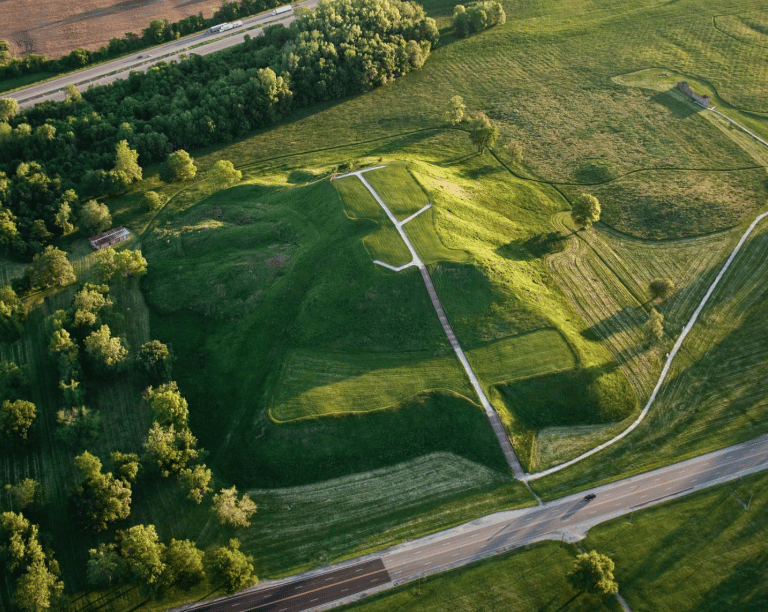
At Cahokia in Illinois, the largest pre-Columbian site north of Mexico, the sun rises directly over Monk's Mound when viewed from the ceremonial woodhenge circle at the equinox, and the official site description still reaches for the only language that fits: it looks as though Monk's Mound gives birth to the sun. Deep in the Guatemalan rainforest at Tikal, the equinox sun rises behind the Temple of the Great Jaguar and appears to crown its peak, enacting the resurrection of the night sun from the nine-terraced underworld encoded in the pyramid's very architecture.
Different myths. Different languages. Different landscapes. The same orientation, again and again, toward the east, at that exact moment in the year.
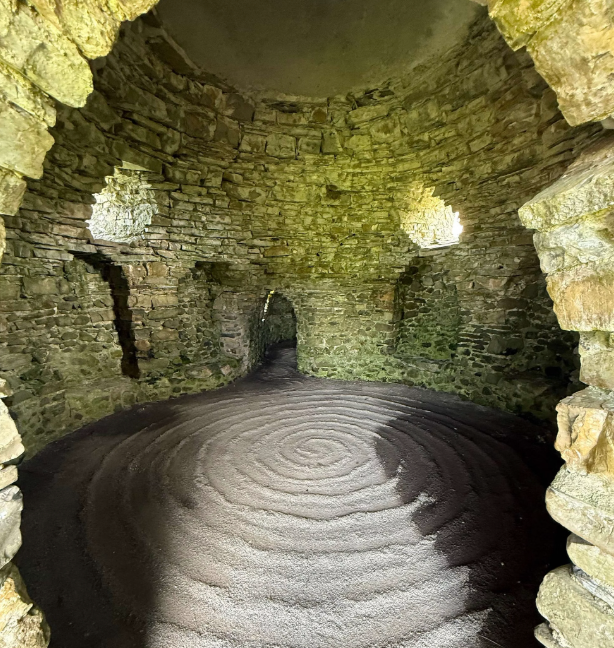
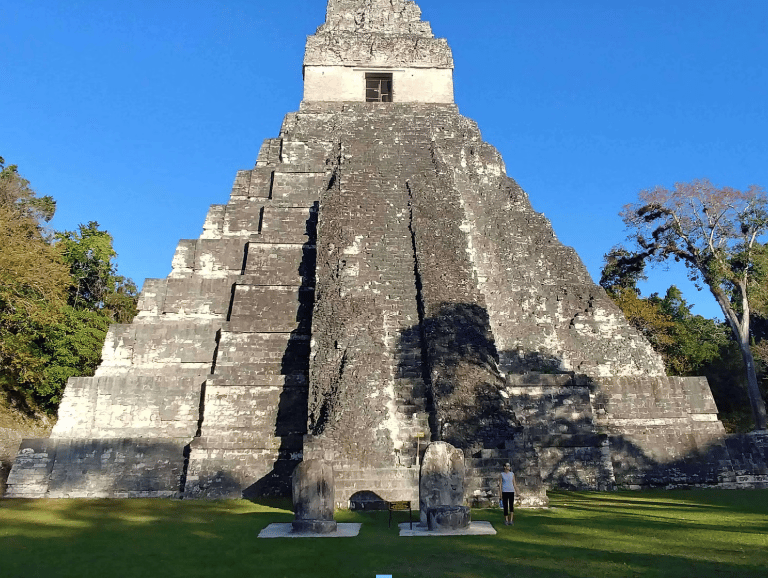
Tikal, Guatemala
Knowth, Ireland
Monk's Mound, Cahokia
More Than a Seasonal Marker
It is tempting, from a modern vantage point, to reduce all of this to agriculture and survival. Early societies needed to track the year. That explanation is not wrong, but it is nowhere near complete. The scale and symbolism of these structures go far beyond what any functional calendar would require. These were not markers. They were statements about the nature of existence itself.
The sun was used across ancient religions and mystery schools to represent the higher self of each person, understood as residing in a divine realm but capable of reunion with the living. The sun god in culture after culture follows the same arc: born at the winter solstice, killed and descended into the underworld at the autumn equinox, resurrected in the spring. Osiris in Egypt, the First Father Hun Hunahpu of the Maya, Indra returning to heaven at Angkor Wat, the unnamed initiates who descended into the stone chambers of Ireland and emerged transformed. These are not copies of each other. They are parallel responses to the same phenomenon, grounded in careful observation of the natural world and the conviction that what happens in the sky is a mirror of what is possible within a human being.
The Spring Equinox, in that context, was not just a date on a calendar. It was a threshold. The moment when balance tipped, when light began to overtake darkness, and when that shift could be witnessed directly, requiring nothing but presence and an open sky.
When the Meaning Shifted
That shared pattern did not disappear when Christianity arrived. It was absorbed.
Easter is calculated to fall near the Spring Equinox because that is exactly where the ancient world had always located the return from death to life. The timing was not chosen at random. It was inherited. What changed was not the moment but the framework used to explain it: a living, observable solar cycle became reframed within a singular theological narrative, and the emphasis shifted away from direct observation of the natural world toward belief in a defined doctrinal structure. The equinox that had oriented the Sphinx, the passage tombs of Ireland, the pyramids of the Maya, and the earthen monuments of Cahokia became the backdrop for a story told about one man rather than a pattern written into the sky for everyone.
The Sphinx was already facing east. The cauldron basin at Knowth was already holding the symbolism of regeneration. The sun was already performing its resurrection before any church named it.
The Earth Still Knows
None of this belongs only to the past.
The Spring Equinox still comes every year, still balanced between light and dark, still the moment when the light begins to win. The megalith builders understood that this was not merely a physical event but a pattern that ran through everything: through nature, through history, through the inner life of every person willing to look at their own darkness honestly enough to move through it. They built their most sacred structures to face that moment. They carved serpents and turtles and crosses and cauldrons and scales into the bedrock of their traditions and pointed them all toward the same sunrise.
Across cultures and centuries, the same sun has marked the return of light for everyone, a simple, shared truth that existed long before belief divided it.
With Love & Liberty
Jen Coombe ✨ alias ~ Jennadea
Interested in exploring the Spring Equinox as a living practice? Join me for the Full Moon Circle Livestream on April 1st on YouTube, where we'll be working with the energies of this season in real time.